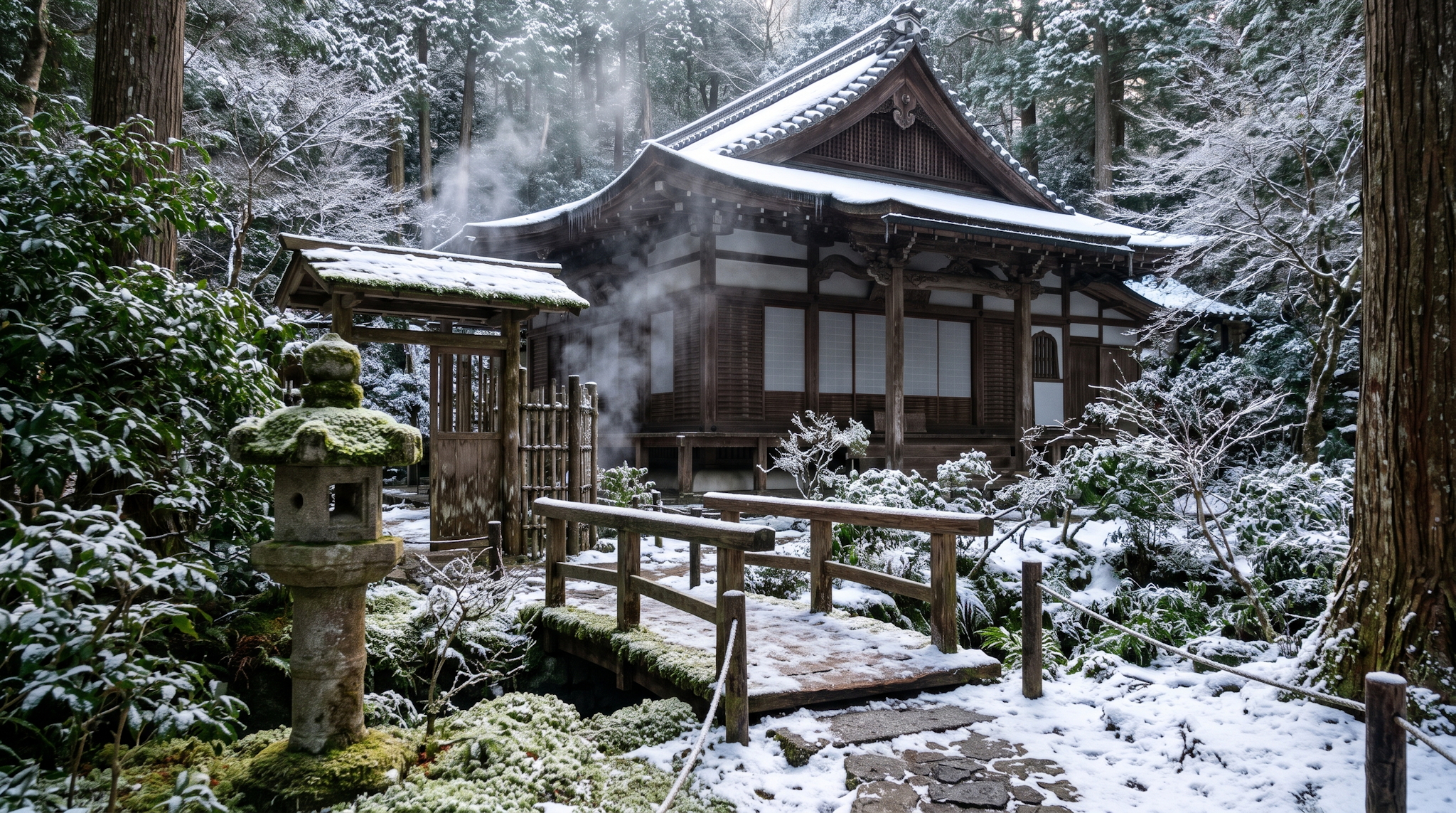
Once the autumn maple crowds disperse and crisp mountain air settles over the Higashiyama hills, Kyoto returns to a state of quiet reverence. Between December and February, mornings begin with delicate frost sparkling across centuries-old moss gardens, bamboo groves sway in silence, and cedar-scented bathhouses offer deep warmth against the chill.
The Philosophy of Winter Stillness (Fuyu no Seijaku)
In Kyoto, winter is celebrated for stripping landscapes down to their purest architectural lines. Without dense foliage, weathered timber eaves, raked white gravel, and distant mist-covered peaks appear in sharp, meditative relief:
"Winter reveals Kyoto’s bones—a dialogue between dark hinoki wood, pale stone, and the gentle steam rising from a bowl of freshly whisked matcha."
1. Where to Stay: Restored Machiya & Mountain Ryokan
Choosing the right winter sanctuary in Kyoto means prioritizing tactile warmth—tatami floors, heated kotatsu low tables, and private cypress soaking tubs:
- Nazuna Kyoto Tsubaki St.: Tucked inside a preserved L-shaped alleyway of restored 110-year-old wooden townhouses near Omiya, each suite blends dark cedar joinery, landscaped tsubo-niwa courtyard gardens, and deep semi-open-air stone baths.
- Hoshinoya Kyoto (Arashiyama): Accessible only by a quiet wooden riverboat gliding up the Oi River, this riverside sanctuary offers serene pavilion rooms overlooking snow-dusted cedar slopes, morning breathing rituals, and seasonal multi-course dining.
- Tawaraya or Hiiragiya (Nakagyo Ward): Centuries-old family-run ryokan where traditional hospitality, hand-embroidered silk futons, and charcoal brazier warmth preserve the unhurried rhythm of old Japan.
2. Morning & Midday: Quiet Temples & Tea Rituals
Arrive at temple gates just as they open at 8:30 AM to experience Kyoto’s sacred spaces in near-solitude:
Honen-in & The Philosopher’s Path
Skip the crowded main thoroughfares in favor of Honen-in, tucked into the wooded foothills of Higashiyama. Step through its thatched moss-covered gate past sculpted white sand mounds (byakusadan) and walk southward along the quiet canal of the Philosopher’s Path.
Ippodo Tea Co. & Kissa Master Roasters
Warm up midday inside the 300-year-old wooden storefront of Ippodo on Teramachi Street, whisking rich ceremonial koicha matcha alongside delicate seasonal wagashi sweets, or duck into a quiet, jazz-scored kissaten coffeehouse like Inoda Coffee or Weekenders Coffee Tominokoji.
3. Evening: Yudofu & Cedar Bathhouse Warmth
As night falls and mountain winds sweep down from Mount Hiei, Kyoto’s winter cuisine centers around gentle simmering broths:
- Nanzenji Junsei or Okutan: Set beside the historic Zen complex of Nanzen-ji, dine inside tatami rooms overlooking illuminated winter gardens on yudofu—silken local tofu simmered gently in kelp dashi with grated ginger, scallions, and yuzu citrus.
- Funaoka Onsen (Kita Ward): End the evening at a historic 1923 neighborhood bathhouse featuring carved wooden transom panels, mineral-rich hot pools, and cedar-lined steam rooms beloved by locals.
Slow Traveler’s Note: Temple & Ryokan Footwear Etiquette
Kyoto’s historic wooden temple corridors and tatami floors are icy cold in winter, and shoes must always be removed at the entrance (genkan). Pack thick, clean wool socks without holes—and choose slip-on leather boots or loafers that can be taken off effortlessly dozens of times a day.