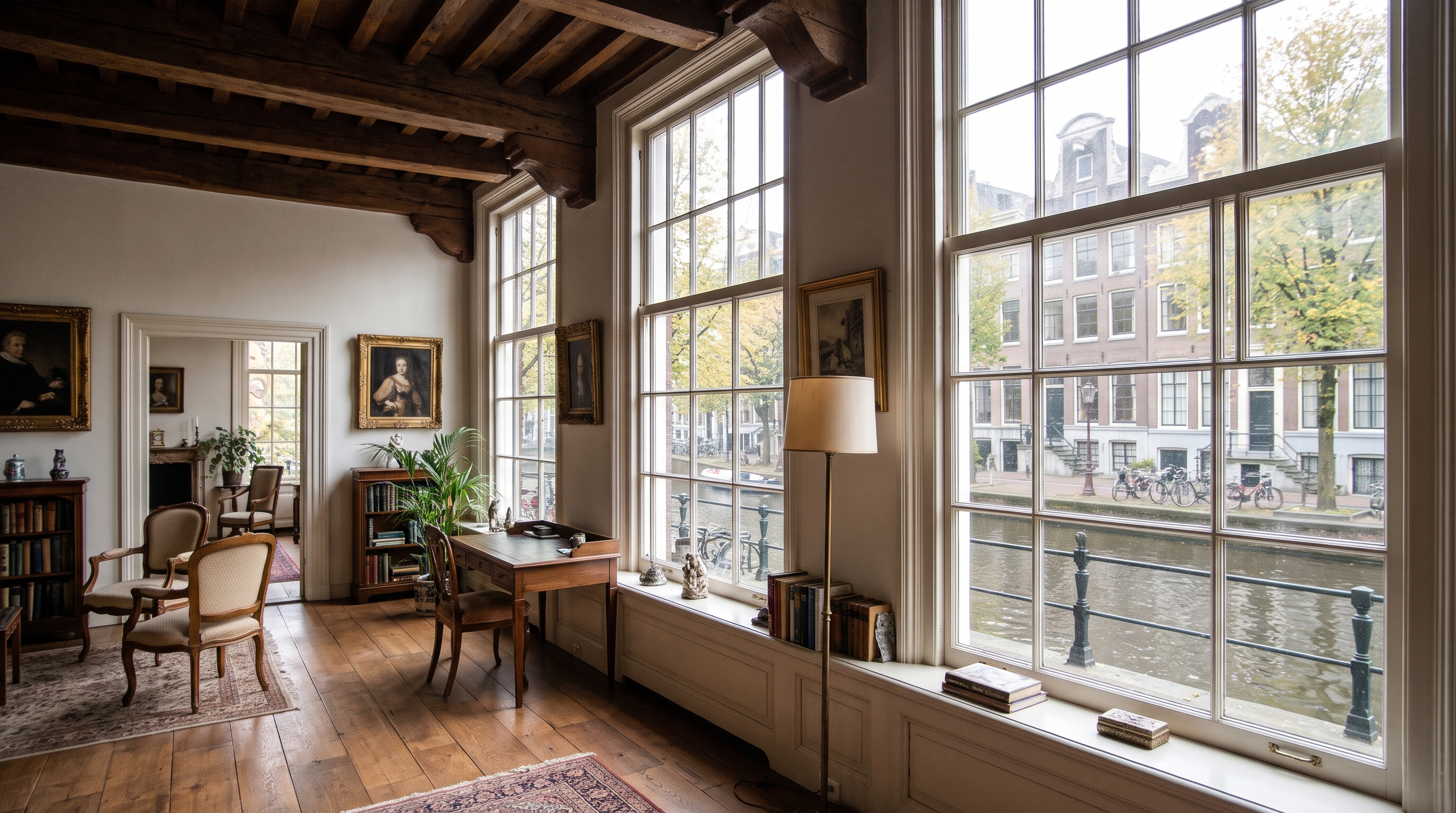
Amsterdam Airport Schiphol (AMS) is widely regarded as one of Europe’s most seamlessly integrated transport hubs. Located only 15 kilometers southwest of the capital, its underground railway station delivers travelers straight into the historic heart of Amsterdam in under twenty minutes.
Planning your complete Dutch escape? Combine this transit manual with our Amsterdam Slow Weekend Itinerary and review our curated list of Historic Canal House Boutique Hotels.
1. The Direct NS Train: Fastest Route to Centraal
The domestic railway terminal sits immediately beneath Schiphol Plaza—the central arrivals atrium. Trains run 24 hours a day, providing the fastest and most reliable route into town.
- Route & Frequency: Direct Intercity and Sprinter trains depart for Amsterdam Centraal every 7 to 10 minutes throughout the day, and once every hour during the late-night hours (01:00 AM – 05:00 AM).
- Journey Duration: Approximately 14 to 17 minutes.
- Single Fare: €4.90 (plus €1.00 single-use paper surcharge if buying a disposable ticket at machines).
The OVpay Contactless System (No Tickets Needed)
Paper tickets are now obsolete across the Netherlands. Using the nationwide OVpay system, simply tap your contactless debit card, credit card, Apple Pay, or Google Wallet on the card reader turnstiles when entering the platform, and remember to tap the exact same card when exiting at your arrival station. The correct standard second-class fare is automatically deducted without extra surcharges.
2. Amsterdam Airport Express (Bus 397) to the Museum Quarter
If your hotel is situated around Museumplein, Leidseplein, or Vondelpark, taking the red Amsterdam Airport Express (Connexxion Bus 397) is often more practical than taking a train to Centraal and dragging luggage onto a south-bound tram.
- Departure Platform: Bus Platform B15–B19 outside Schiphol Plaza.
- Key Stops: Museumplein, Rijksmuseum, and Leidseplein.
- Travel Time: Roughly 30 minutes.
- Operating Hours: Departs every 8 minutes by day; replaced by Night Bus N97 during early morning hours.
- Ticket Cost: €6.50 one-way (payable via card or OVpay directly on the bus).
3. City Taxis & Ride-Hailing Apps
While rail transit is faster in 90% of cases, official taxis offer door-to-door convenience if you arrive late at night or carry oversized luggage.
- Official Taxi Rank: Follow the illuminated taxi signs outside Schiphol Plaza. Registered Dutch cabs use blue license plates and must engage their meters. A daytime ride into the canal belt typically ranges between €45 and €65.
- Uber & Bolt: Pick-up points are located near the designated parking zones outside Terminal arrivals. Fares fluctuate between €35 and €55 depending on traffic congestion and dynamic pricing.
4. Private Door-to-Door Transfers
Amsterdam’s historic 17th-century canal streets feature narrow one-way brick thoroughfares, pedestrian-priority bridges, and limited vehicle turning circles. Pre-booking a private driver guarantees a warm meet-and-greet in the arrivals hall, route planning tailored to tricky canal quays, and seamless luggage assistance directly to your hotel door.
Book an Amsterdam Airport Private Transfer on Welcome Pickups →
5. Surviving Amsterdam’s Bicycle Infrastructure
With over 800,000 bicycles cruising across the city, pedal traffic moves swiftly and takes absolute priority over pedestrians. Keep these fundamental rules in mind from your first hour:
- Look for Red Asphalt: Dedicated bike tracks (fietspaden) are paved in distinct reddish-brown asphalt or marked by bicycle stencils. Never stand, stroll, or pause with luggage in these lanes.
- The Double Check: Always look both left and right before stepping off any curb, even on what appears to be a quiet one-way side alley. Cyclists travel fast and silently.
- Renting a Bike: If you decide to rent a bicycle, stick to the right side of the lane, indicate turns by extending your arm horizontally, and avoid looking at smartphone navigation while pedaling (holding a phone on a bicycle carries a strict €160 municipal fine).
Instant Mobile Data Connectivity
Avoid searching for local telecom counters upon landing. Setting up an eSIM profile before boarding your flight ensures immediate map access and tram scheduling right when you step off the plane.