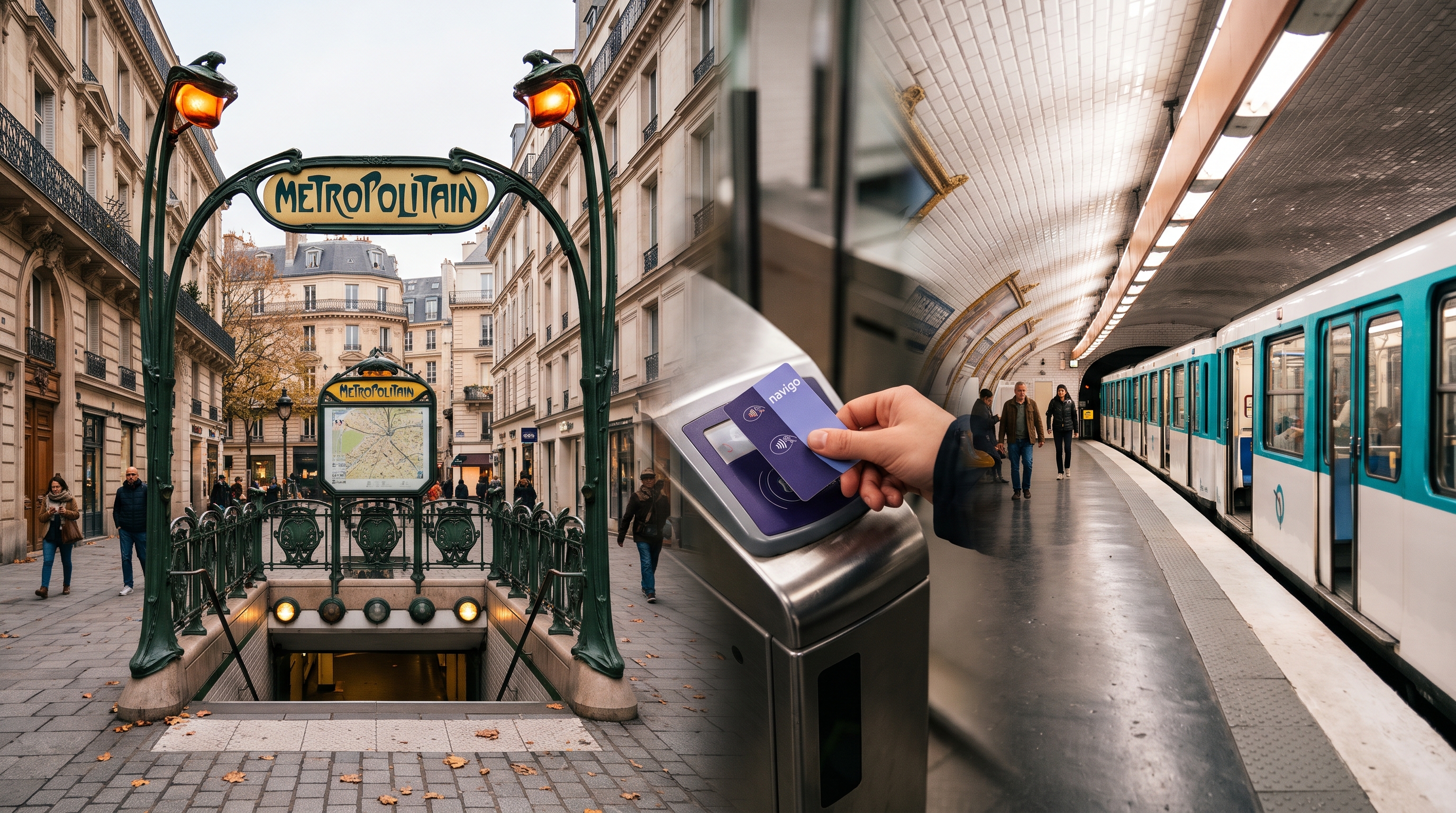
Underneath Paris lies one of the dense, historic railway networks in the world. Rather than viewing the Paris Métro merely as a functional necessity, slow travelers can see it as a subterranean gallery: cast-iron Art Nouveau canopies, white beveled tiles reflecting warm tungsten lamps, and station platforms that mirror the architecture of the arrondissements above.
1. Entering Through Art: Hector Guimard’s Portals
At the turn of the 20th century, architect Hector Guimard designed the entrances to the newly opened Métropolitain, integrating nature-inspired cast iron curves, amber lantern bulbs, and organic plant motifs into the city's streetscape.
"The Paris Métro is the pulse of the capital — step below the street level not to rush from monument to monument, but to observe the daily choreography of Parisian life."
Notable historic stations to admire during your wanderings:
- Porte Dauphine (Line 2): Home to one of the only remaining original glass-roofed édicules (dragonfly wings canopy) designed entirely by Guimard.
- Abbesses (Line 12): Tucked in Montmartre, featuring an authentic Guimard covered portico surrounded by plane trees, leading down via ceramic-tiled spiral staircases.
- Arts et Métiers (Line 11): Redesigned in tribute to Jules Verne, the platform is clad entirely in copper plates, complete with faux portholes and mechanical gears.
2. Ticketing Made Simple: Contactless & Navigo Easy
The days of fragile magnetic paper tickets (carnet) are largely phased out. To travel seamlessly without standing in ticket lines, adopt modern cardless transit:
- Navigo Easy Card: Purchase a physical plastic card for €2 at any ticket booth, then top it up with a bundle of digital T+ tickets or day passes via the ticket machine or your smartphone NFC.
- Smartphone Digital Passes: Load tickets directly onto your Apple Wallet or Android transit app to tap through turnstiles directly using your phone or smartwatch.
- Transfers & Rules: A single T+ fare covers Métro-to-Métro transfers within 90 minutes of the first validation. Note that transferring between Métro and surface buses requires a separate ticket validation.
3. Subterranean Etiquette & Practical Wisdom
Observing the unspoken rhythm of Parisian commuters makes underground travel calm and dignified:
- Escalator Etiquette: Always stand firmly on the right side of the escalator, leaving the left lane completely clear for fast-walking commuters.
- Folding Seats (Strapontins): When a train gets crowded or reaches central junction stations (like Châtelet or Saint-Lazare), stand up immediately from fold-down jumper seats to create standing room for others.
- Exit Strategy (Sortie): Look up at overhead blue illuminated signs. Stations often have numerous numbered exits (Sorties). Checking which exit corresponds to your desired street beforehand saves long outdoor detours.
Slow Traveler’s Transit Alternative: Bus Line 69
When you prefer to travel above ground with an eye on limestone facades, board Bus Line 69. It runs an unhurried scenic route from the Champ de Mars past the Musée d'Orsay, the Louvre, Châtelet, and the Marais all the way to Père Lachaise for the price of a standard bus ticket.