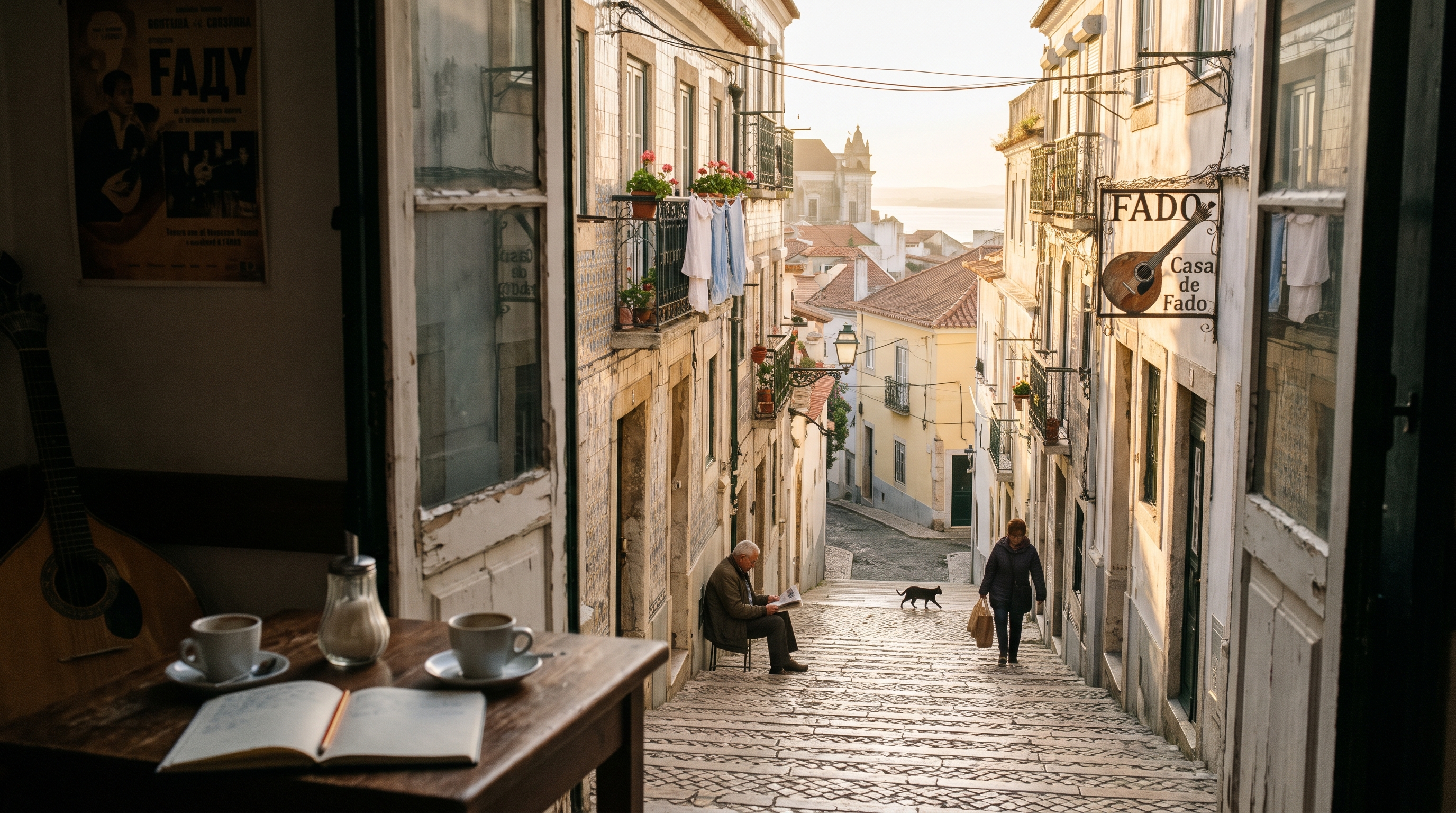
Lisbon is a city of distinct vertical layers. What appears as a modest 300-meter stroll on a digital map often translates into a calf-burning ascent up a 20-degree limestone cliff. To experience the Portuguese capital without exhaustion, travelers must adopt the rhythm of Lisbon's age-old transit network — an intricate web of timber trams, yellow funiculars, and concealed public elevators.
The Art of Navigating the Seven Hills
Rather than relying on ride-hailing apps that get trapped in narrow, one-way alleys, navigating Lisbon like a local means working with the landscape rather than fighting it.
"In Lisbon, transit is not merely a utility; it is an architectural dialogue with elevation, gravity, and afternoon Atlantic tides."
1. The Elevadores (Funiculars & Public Lifts)
Before boarding, purchase a reloadable Viva Viagem or Navegante card at any metro station. Tapping this card reduces single fares drastically compared to purchasing tickets directly from on-board drivers.
- Ascensor da Bica: Connecting the Rua de São Paulo with Bairro Alto, this iconic 1892 funicular slides through one of the prettiest, laundry-draped corridors in the city. Ride it early in the morning before crowds gather.
- Elevador de Santa Justa: Designed by Raoul Mesnier du Ponsard (an apprentice of Gustave Eiffel), this neo-Gothic iron tower links Baixa to the ruins of Carmo Convent. Local tip: Skip the long ground-level ticket queue and access the panoramic Carmo bridge platform for free directly from the rear of Largo do Carmo.
- Elevador do Castelo: A discreet, free municipal elevator hidden inside a renovated building on Rua dos Fanqueiros that whisks you halfway up to the São Jorge Castle without breaking a sweat.
2. Historic Trams: Timing is Everything
The famous Eléctrico 28 is legendary for a reason, but boarding it at midday in Martim Moniz often results in standing elbow-to-elbow with pickpocket warnings ringing in your ears.
Alternative Strategy:
Board the 28 at its terminus in Campo de Ourique (Prazeres Cemetery) at 7:30 AM. You will get a polished wooden window seat all to yourself as the yellow carriage winds down through Estrela, Chiado, and Graça, bathed in clean Atlantic dawn light.
Alternatively, take Tram 12, which performs a shorter, considerably less congested loop through Alfama and Mouraria.
3. Mastering Calçada Portuguesa (Cobblestone Etiquette)
Lisbon’s signature black-and-white patterned limestone pavements (calçada portuguesa) are exquisite works of street art, but they demand attention:
- Footwear Selection: Leave smooth leather-soled shoes and stiff boots behind. Vibram rubber outsoles or textured sneakers are non-negotiable.
- Morning Mist & Rain: Even light ocean spray or morning dew turns polished limestone into a near-ice surface, particularly on downward gradients. Shorten your stride and follow dry gravel lines where possible.
Slow Traveler’s Transit Rule: Ferry to Cacilhas
For the most dramatic view of Lisbon's waterfront at sunset, take the commuter ferry (cacilheiro) from Cais do Sodré across the Tagus River to Cacilhas. The 10-minute crossing costs under €2, offering unobstructed vistas of the 25 de Abril Bridge and the golden facades of Baixa across the water.